News
Portishead – A Placemaking Approach to Street Design
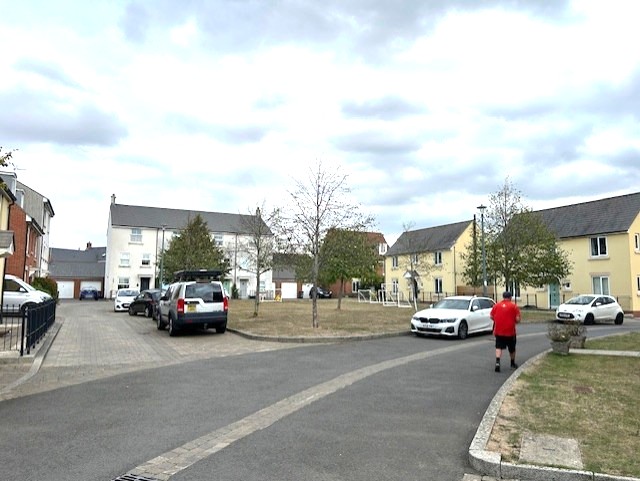
In this article DCFW Design Review Co-Chair, Kedrick Davies, reflects on his experience working for North Somerset Council shaping the residential expansion of Portishead and how a placemaking approach to street design challenged typical highway standards and created adoptable streets that helped create a sense of character and a popular place to live.
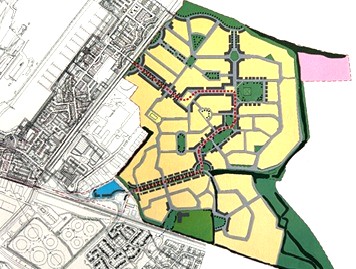
The eastern part of the wider scheme is known as Port Marine Village and has 1650 new homes, a school, commercial units and an elderly persons scheme. The masterplan below illustrates how the street network incorporated a hierarchy with primary/secondary routes that provide a bus route and penetrate key public spaces, which assists with wayfinding and for residents to associate with place, and lower level streets that occurred between the key main circulation routes.
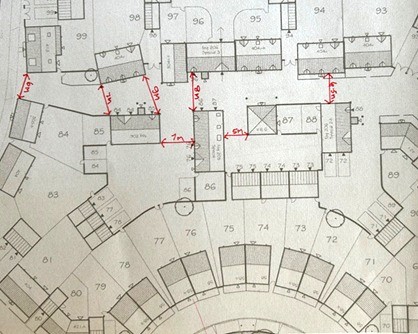
The layout below is of a small section of the scheme that shows an example of the lower order streets, with a shared surface mews that connects to adjoining streets and was adopted. The design includes central drainage and no pavements. Street widths within the mews street are tight between buildings, with distances of 6m – 8/9m. Elsewhere, other lower order streets that connect to secondary and primary routes are 5.5m wide shared surface streets with central drainage. Within the scheme, the only streets with pavements are the higher order streets. There are no cul-de-sacs, with all streets generally linking through to other streets.
The advantages of the street design approach used in Portishead include:
- The street hierarchy creates different character areas that are distinct and create greater interest.
- The connected street network, with no cul-de-sacs, avoids the need for large turning heads, ensures ease of access for services and provides good route choice for residents.
- Vehicle speeds are controlled naturally through street width/alignment and building placement, with the mews streets and shared surface streets requiring lower speeds and creating safer pedestrian usage.
- The mews streets accommodate market entry homes.
- Overall, the street design maximised the use of limited land and reduced construction and maintenance costs.
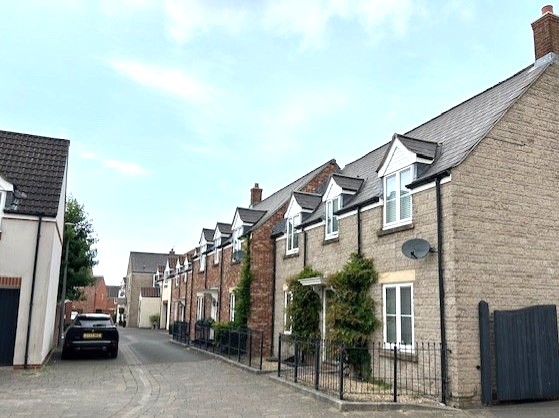
The opportunity to design positively with urban design and placemaking at its heart can be achieved with a one council approach, with highway design being viewed as one element in the fabric of an urban area. The fact that Planning and Highway functions were within the same department, with one chief officer, assisted in this more enlightened approach to placemaking. Internal departmental processes also ensured that any deviation from the planning approval at the highway design adoption stage had to be referred back to the four person project team that oversaw the significant expansion of Portishead around the new marina and Port Marine Village. The development in Portishead has now been in existence for over 20 years and interviews with residents indicate it is a popular place to live.
It should be noted that the planning process post the outline consent was based around the “Time for Design” approach, with regular design workshops with the developer, their consultants and local authority project team. You can find out more about the Portishead development and the “Time for Design” approach to the planning process in the Case Studies section (p.62 – 72) of the Placemaking Wales Guide – Placemaking Wales Guide | Design Commission for Wales.