News
Placemaking and the Importance of Urban Design Skills
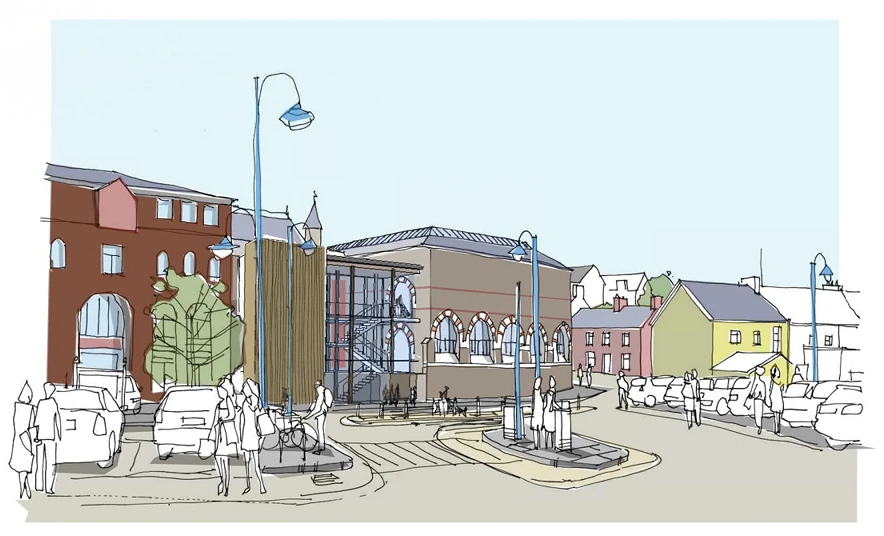 Cardigan Market Hall Regeneration: celebrating local identity through heritage and place-specific culture (Image: Cardigan Building Preservation Trust)
This article, written by Louise Thomas on behalf of the Urban Design Group, explores how urban design skills underpin effective, people-centred placemaking.
Placemaking is a human-led approach to planning, designing and managing public spaces for people, communities and local identity. Instead of starting with buildings, traffic models or land values, placemaking begins by asking how places can work best for people. Of course, we include nature in this, as we know that the benefits of human interaction with nature are essential to wellbeing, let alone combatting climate change.
This approach is also fundamental to urban design – putting people and how we use and experience spaces at the heart of design. As the urban designer Joe Holyoak writes in Urban Design, the Urban Design Group’s quarterly journal, “Place = Space + Use”.
Obviously, urban design skills are taught in universities, but all of us observe and experience good or bad urban design on a daily basis, which is why listening to local communities is so important when making plans for change. Another key urban design skill is being able to work with others to look at the many layers of urban places – whether these are green spaces, movement networks, land uses or more – much like the layers of an onion, to see what the existing strengths of a place are, as well as the gaps or weaknesses to be improved.
In the Urban Design Group’s recent work with some of the UK’s leading developers about how urban design can improve new or existing places, they are clear that “urban design is not the same as architecture or landscape architecture, and.. it is bigger than masterplanning”, seeing urban design as both “a science and an art… logic and magic”.
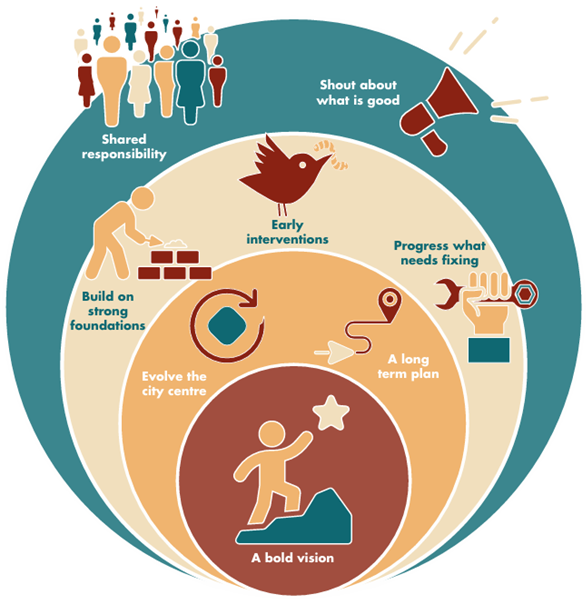
The urban designer’s ability to create a vision of a better place brings together these listening and observation skills with drawing and story-telling, so that shared aspirations can be captured and turned into compelling, holistic strategies. However developers also describe urban designers as “moving visions into viable schemes” which requires one final key skill: setting out clear, practical policies and defining pivotal projects, which will kick-start the process of change.