News
Impact Study: Training with Rhondda Cynon Taf County Borough Council

Building confidence to champion better places
How bespoke training from DCFW helped planning officers strengthen their understanding of placemaking, develop practical design assessment skills and build confidence in responding to development proposals.
The challenge
Local authorities make decisions every day that shape how places look, feel and function. Planning officers assess proposals of different scales, balance policy and delivery pressures, and negotiate with applicants and developers.
Achieving good outcomes requires more than having the right policies in place. Officers also need the confidence, shared understanding and practical skills to apply them consistently.
In June 2026, DCFW delivered a bespoke placemaking and design training session for Rhondda Cynon Taf County Borough Council.
The Council had experienced staff turnover and had a relatively new Development Management team, including several newer and younger planners. While officers understood the principles of placemaking and sustainable development set out in Planning Policy Wales, applying these principles consistently to individual planning applications presented a challenge.
As the commissioning officer explained: “It’s very easy to read something. It’s less easy then to try and translate that into well, what does that mean in terms of the application we’ve got in front of us?”
The aim was to bridge this gap between understanding policy and applying it in practice, helping officers recognise opportunities to influence design quality through their everyday planning work.
Our approach
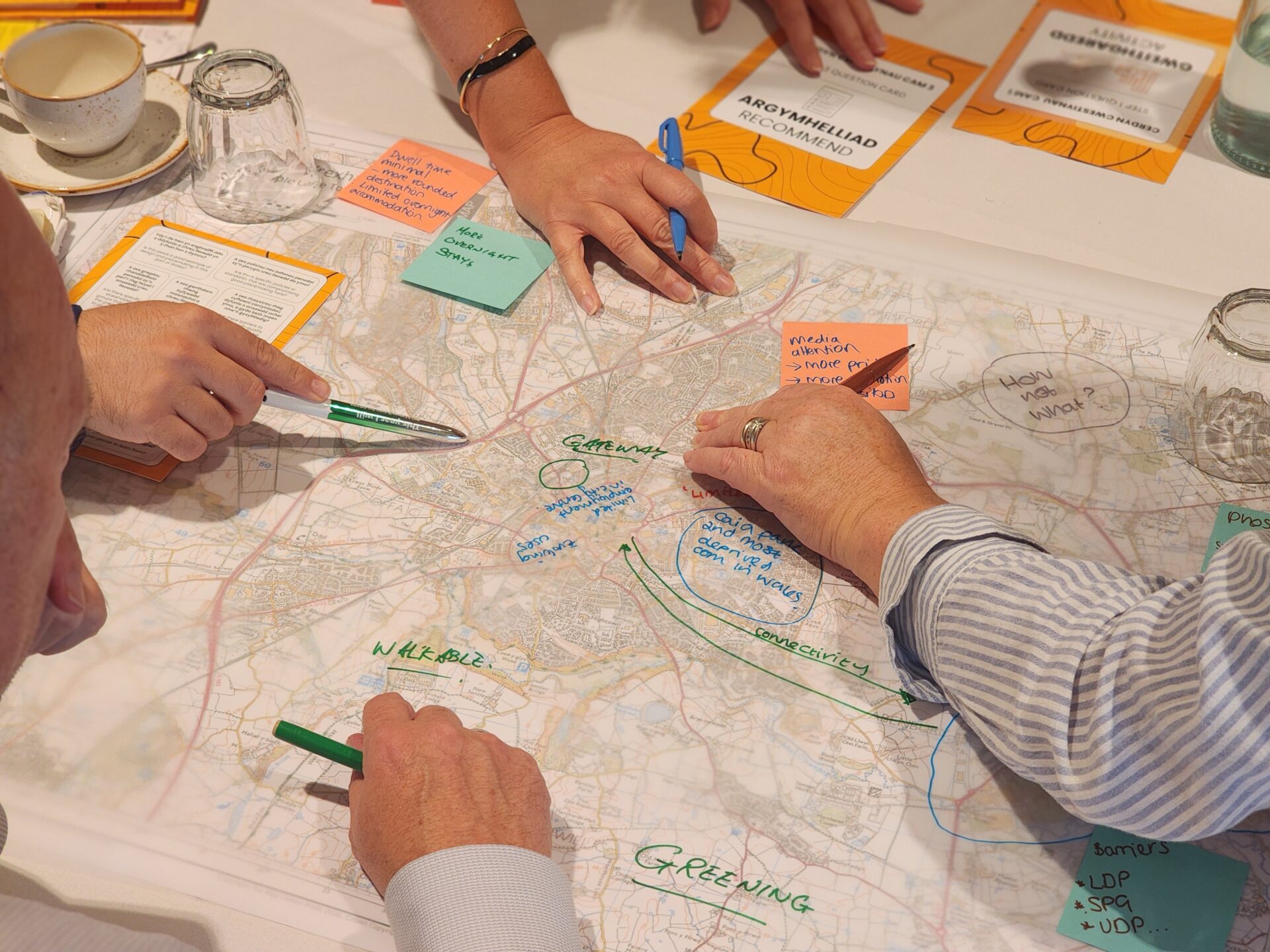
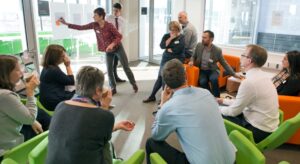
Rather than delivering an off-the-shelf presentation, DCFW shaped the session around the Council’s experiences, the needs of its officers and the challenges they faced locally.
The training used three local development schemes as practical examples:
-
Forest Hills Drive: A householder extension.
-
Former Miskin School: An affordable housing development.
-
Ffordd y Friallen: A large residential development.
Using schemes familiar to the team helped make the discussions relevant and grounded in real planning decisions.
Officers were able to reflect on how design decisions had translated into completed developments, consider what could have been approached differently and explore what they might question or challenge in future proposals.
The session also introduced successful examples from elsewhere, allowing participants to compare local experiences with wider practice.
The discussions demonstrated that design is not simply about appearance or personal preference. It is a process of analysis, assessment and problem-solving that can be approached through objective questions.
Officers were encouraged to consider:
-
Why has a proposal been designed this way, and what thinking sits behind it?
-
How does it respond to the opportunities and constraints of its site and surroundings?
-
Is there a clear vision for the place being created?
-
Can the applicant explain how the design has evolved, rather than simply describe the final proposal?
-
Is there a clear connection between the site analysis, design rationale and proposed response?

Site visit from our recent workshop
The completed schemes were also considered against recurring themes from DCFW’s Design Review work:
-
Outdoor space
-
People
-
Connectivity
-
Sustainability
-
Density and urban form
-
Identity and parking
This helped participants understand how individual technical decisions combine to shape people’s experience of a place and its long-term quality.
Learning through real examples
“[It] was helpful to see how they would have interpreted it.”
Training participant feedback
The difference it made
Feedback from the session was positive, with participants finding the training interesting and useful. Reviewing completed schemes was highlighted as particularly valuable.
The Council’s commissioning officer felt that the team was better placed to consider the placemaking impact of future development proposals and shape its responses.
The follow-up discussions also provided early signs that the learning was beginning to influence everyday practice.
Colleagues indicated that they intended to apply the ideas when assessing planning applications. The commissioning officer also noticed a newer member of the team giving greater consideration to placemaking during a site meeting, while a team leader discussed how placemaking principles could be applied to a current small housing scheme.
Putting learning into practice
“I could tell from his appreciation that he was giving more thought to those kinds of issues.”
The training built on work that was already developing within the Council. Following an earlier Welsh Government call-in, the commissioning officer had begun referring more directly to placemaking outcomes in reports on larger schemes.
The intention was to integrate this reasoning into the main planning assessment rather than treat placemaking as a separate tick-box exercise.
While evidence of consistent change across the whole team was still emerging, the feedback suggested that the session had helped strengthen officers’ confidence and understanding.
Feedback from the Council
“The feedback I had from colleagues is that your training session was both very interesting and extremely useful; the review of past schemes particularly so. I feel that we will be better placed, as a team, to consider the impact of developments of all scales, on placemaking.”
– Commissioning officer, Rhondda Cynon Taf County Borough Council
Supporting better planning judgements
The training also explored the practical challenges officers face when different planning objectives compete.
For example, designing out crime advice may favour visible off-street parking, while placemaking principles seek to avoid streets dominated by rows of cars. Highway requirements can also present challenges when trying to achieve a more place-led design response.
Local circumstances add further complexity. In Rhondda Cynon Taf, factors such as topography, former industrial uses, contaminated brownfield land, flooding and development viability can all influence what is achievable.
The training was not intended to resolve every competing priority or provide a single answer to complex planning decisions.
Instead, its value was in helping officers recognise the issues, ask better questions and make more considered, evidence-based judgements.
It reinforced the importance of understanding the wider context of a development and considering how different design decisions affect the quality of the resulting place.
What makes the approach effective?
The strength of DCFW’s training approach lies in combining professional expertise, reflection and practical application.
Rather than separating design principles from the pressures officers experience in their day-to-day work, sessions connect national policy and placemaking ambitions with real planning decisions.
Key elements include:
-
Bespoke content: Sessions are shaped around the organisation, its participants and the issues they face.
-
Real examples: Completed and emerging schemes make design principles tangible and relevant.
-
Constructive challenge: Participants learn to question the thinking behind proposals rather than simply express personal preferences.
-
Multiple perspectives: Different professional disciplines help reveal challenges and opportunities that might otherwise be missed.
-
Practical application: Training focuses on how learning can inform future assessments, responses, policy and guidance.
Reviewing completed schemes is particularly useful. It provides a valuable opportunity to reflect on past decisions, identify recurring issues and consider where the planning process could have had greater influence, without the pressure of determining a live application.
The experience also highlighted the importance of continued learning. The commissioning officer recognised that one session alone was unlikely to embed new ways of working permanently, particularly in a busy team where urgent priorities can quickly take over. “As time goes on, elements will be forgotten and superseded by the next great urgent panic or priority.”
This reinforces the value of ongoing training and opportunities for teams to revisit and build on their learning.
Learning beyond individual projects
The benefits of bespoke training extend beyond individual planning applications.
For local authorities, it can help build a shared understanding across teams, strengthen professional judgement and support more purposeful discussions with developers.
For policy teams, facilitated workshops can bring practical implementation experience into policy development. They provide an opportunity to test whether guidance is usable, identify where professional or organisational systems conflict and understand what additional support teams need.
Ultimately, the aim is not to turn every planning officer into a design specialist. It is to give people the confidence and skills to recognise good design, ask the right questions, challenge proposals constructively and seek independent expertise when it can make a difference.
How DCFW can support your team
DCFW provides bespoke training and facilitated workshops for local authorities, Welsh Government teams and other public bodies.
Sessions can focus on:
-
Placemaking principles and their practical application.
-
Design assessment and reviewing development proposals.
-
Learning from completed schemes.
-
Collaboration across professional disciplines.
-
Implementing planning policy and guidance in practice.
Our support is shaped around the needs of each organisation and its participants.
Looking to strengthen your team’s confidence in championing good design and placemaking?
Get in touch to discuss the challenges your organisation is facing and how DCFW could help.