News
Unlocking the Potential of Small Sites
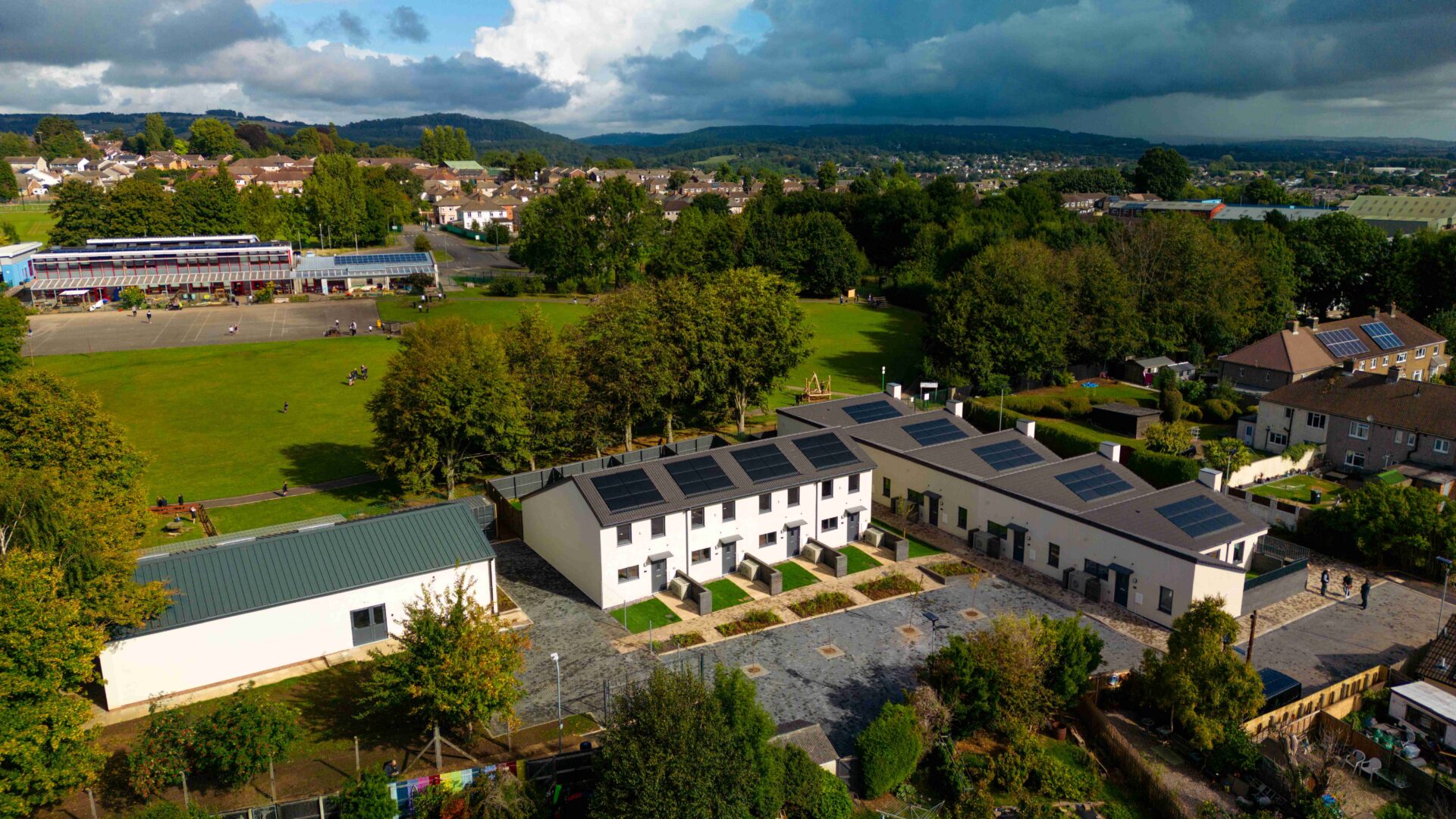 Arial shot of Pembroke Road and Western Avenue
Across Wales, small and often overlooked sites within existing communities represent a significant opportunity to deliver much-needed affordable homes. Former garage courts, underused parking areas and fragmented pieces of land can often appear too constrained or difficult to develop. Yet our experience at Awen has shown that, with the right partnerships and design approach, these sites can deliver far more than housing alone.
For many years we have explored opportunities to bring forward underused land within our existing communities. However, as expectations around requirements such as SuDS, environmental performance and accessibility have evolved, delivering successful developments on small sites has become increasingly challenging. Maximising housing numbers alone is rarely enough. Small sites must also work for existing neighbours, support community life and contribute positively to the places around them.
One project that illustrates this approach is Pembroke Road in Bulwark, Chepstow. The site was previously a garage courtyard located behind existing homes and providing access to the local Scout Hall. Like many small sites, it presented a number of challenges. The land was constrained, relationships with neighbouring uses needed careful consideration, and there was a desire to achieve a high-quality design outcome rather than simply maximise development potential.
The adjoining Scout Hall had been serving local young people and community groups for over fifty years but had fallen into poor condition. The ageing building suffered from significant maintenance issues and was becoming increasingly difficult for the Scout Group to use. At the same time, the Scout Hall occupied a small piece of land that would help unlock a better development solution for the housing scheme.
Rather than viewing the project solely as a housing development, we worked collaboratively with the Scout Group to explore how both aspirations could be achieved together. An agreement was reached whereby a small land transfer enabled a more effective site layout, whilst investment linked to the development supported the comprehensive refurbishment of the Scout Hall.
The result was the delivery of nine affordable homes alongside the transformation of an important community asset. The refurbished building now provides improved accessibility, modern facilities and a sustainable future for a community organisation that remains within walking distance of the neighbourhood it serves. What might once have been viewed as a constrained garage site became an opportunity to improve both housing provision and community infrastructure.
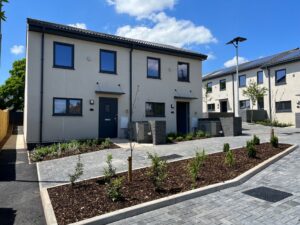
Support through Welsh Government’s Innovative Housing Programme, alongside collaboration with the Welsh School of Architecture, Design Commission for Wales and Capsel, helped us challenge traditional approaches to small-site development. The programme encouraged us to consider how design quality, placemaking and community benefits could be integrated from the outset, rather than treated as secondary objectives.
Our key learning is that the value of small sites extends well beyond the homes they deliver. The most successful projects arise when developers take time to understand local context, engage with community stakeholders and identify opportunities that exist beyond the site boundary. Small sites can unlock regeneration, improve community facilities and strengthen existing neighbourhoods whilst contributing to affordable housing delivery.
As housing providers continue to search for opportunities within established settlements, we believe there remains significant untapped potential in underused land. Realising that potential will require creativity, collaboration and a design-led approach, but our experience suggests that some of the smallest sites can often deliver the biggest benefits for communities.