News
New Design Lead, Felicity Barbur
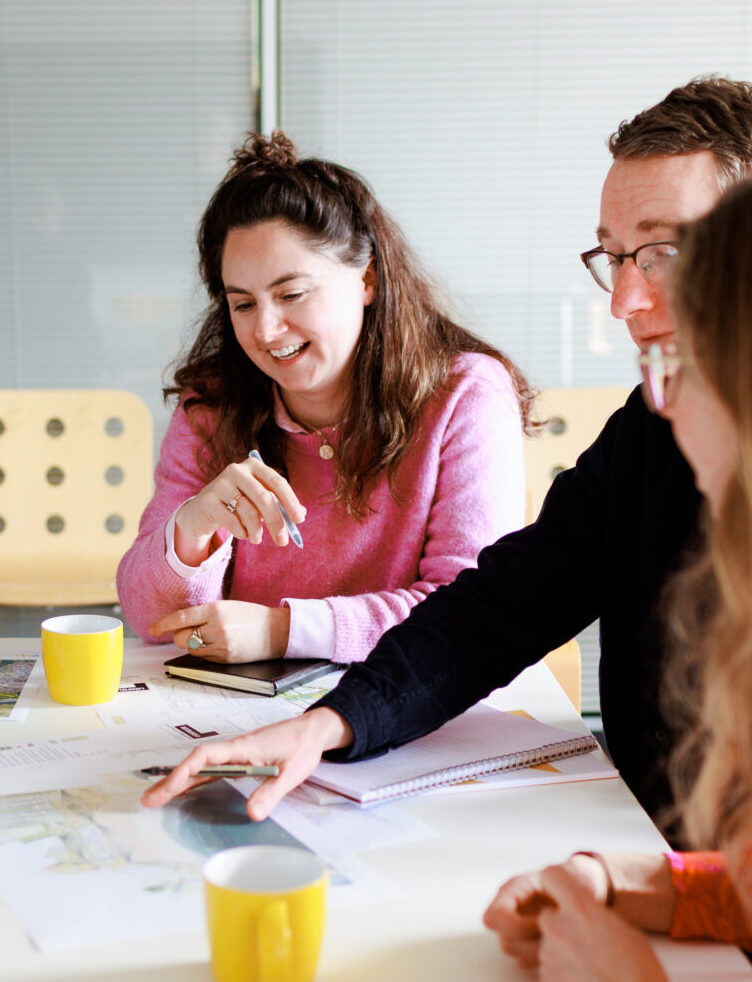
We are pleased to welcome Felicity Barbur as our new Design Lead.
Felicity is an architect with experience in high street regeneration, social housing, engagement and participatory design. As Design Lead Felicity will develop and run key initiatives to promote good design and placemaking across different sectors and disciplines.
Having been in the role for one month, Felicity has reflected on what she sees as the key opportunities and challenges for DCFW and her new role.
Raising the impact of the Design Commission for Wales
The construction industry is among the slowest to change, and the Welsh built environment faces significant challenges in meeting the needs and aspirations of people, place, and planet. Both struggles are part of a system that involves and affects people. This is where the Design Commission for Wales comes in.
Just over a month into my role as Design Lead at the Design Commission for Wales, I am beginning to gain an insider’s view of how DCFW tackles its mission to ‘make Wales a better place for everyone’. What I find most exciting is being part of a team that can reach those who are tackling the problems facing the whole country. It feels like a big responsibility; there is nobody else in Wales in a non-biased position to think critically about the importance of design in delivering public value.
One challenge DCFW faces is that the term ‘design’ is broad. To reach as many Local Planning Authorities, Welsh Government departments, building professionals, research organisations and communities involved in improving people’s lives across such a wide context, with limited funds and an overstretched industry, it needs to be clear about what it means by good design so that it can communicate it at different levels to different audiences.
Our core services focus on empowering, upskilling, and challenging design. All our support is bespoke, as no two designs are the same. I am surprised to learn that involving DCFW is considered by some to be supplementary, a nice-to-have, or better placed later in the process, when there is more design to discuss. But the advantage is to involve DCFW as soon as one has a project that will propose how people will live, work, travel, or even play! If left too late, the opportunity to build in a dialogue about the design’s quality within a more holistic vision is reduced. Good design begins with thinking about how to integrate conceptual and technological strategies into the details and spatial qualities.
In my first month, I have attended the Culture and Placemaking Conference organised by DCFW, an Away Day with our Design Review panellists, and, having organised a meeting with the Placemaking Wales Partnership, I see DCFW’s greatest asset as the people who engage with us and help foster this collaborative model. As a result, I am gearing up to focus our 2026 efforts on delivering new events, workshops, and design reviews that will connect different disciplines to join thinking at the early stages of design, where it can have the greatest impact on quality with the least negative impact on time and cost.
This approach aims to eliminate projects that are insufficiently considered, lack clarity, or only partially reflect the needs and aspirations of people, place, and planet, and to move towards a more creative outlook. Our impact will grow whether we see improvements in the quality of design in individual projects, a shift in regional thinking, or a change in how the industry unlocks major built-environment bottlenecks. At the same time, raising awareness of how greater success was achieved will ensure DCFW becomes instrumental in guiding and supporting future projects. More projects that move from being limited in thought to clearly reflecting thought, and then to being creatively informed, will showcase that improving early-stage decisions can lead to better design.
With the ever-increasing number of policies, legislation, and regulatory tick-boxes put in place to do the same thing in a more rigid way, and with good design evolving constantly, there will be benefits for all if DCFW became a concise best-practice ‘where to look’. Chief Executive, Jen Heal, is taking the lead at DCFW to achieve this within a new five-year plan, and we are refining and showcasing how our support helps create better places for everyone. Having a louder voice as leaders will ensure we are not missed or forgotten. Less is more when it is done well. Help us celebrate the impact the Design Commission for Wales has had and can continue to have. Get in touch – we are here to help.