News
Impact Story: Monmouthshire Replacement Local Development Plan
Embedding placemaking into local planning policy
Working with Monmouthshire County Council at an early stage of its Replacement Local Development Plan (RLDP), DCFW helped bring placemaking considerations into discussions about strategic site allocations, strengthening policy expectations before detailed conversations with developers began.
The project
Monmouthshire County Council is preparing a Replacement Local Development Plan (RLDP), which will guide how land is allocated and developed and set expectations for developers.
Before the plan reached its public consultation stage, the Council invited the Design Commission for Wales (DCFW) to contribute to early discussions about how potential development sites could be used.
This provided an opportunity to embed placemaking principles into the site allocation process from the outset, rather than introducing them once development proposals were already taking shape.
It was also the first time DCFW had worked with a local authority at such an early stage of the development plan process.
Our approach
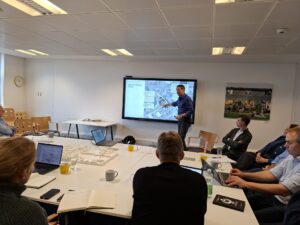
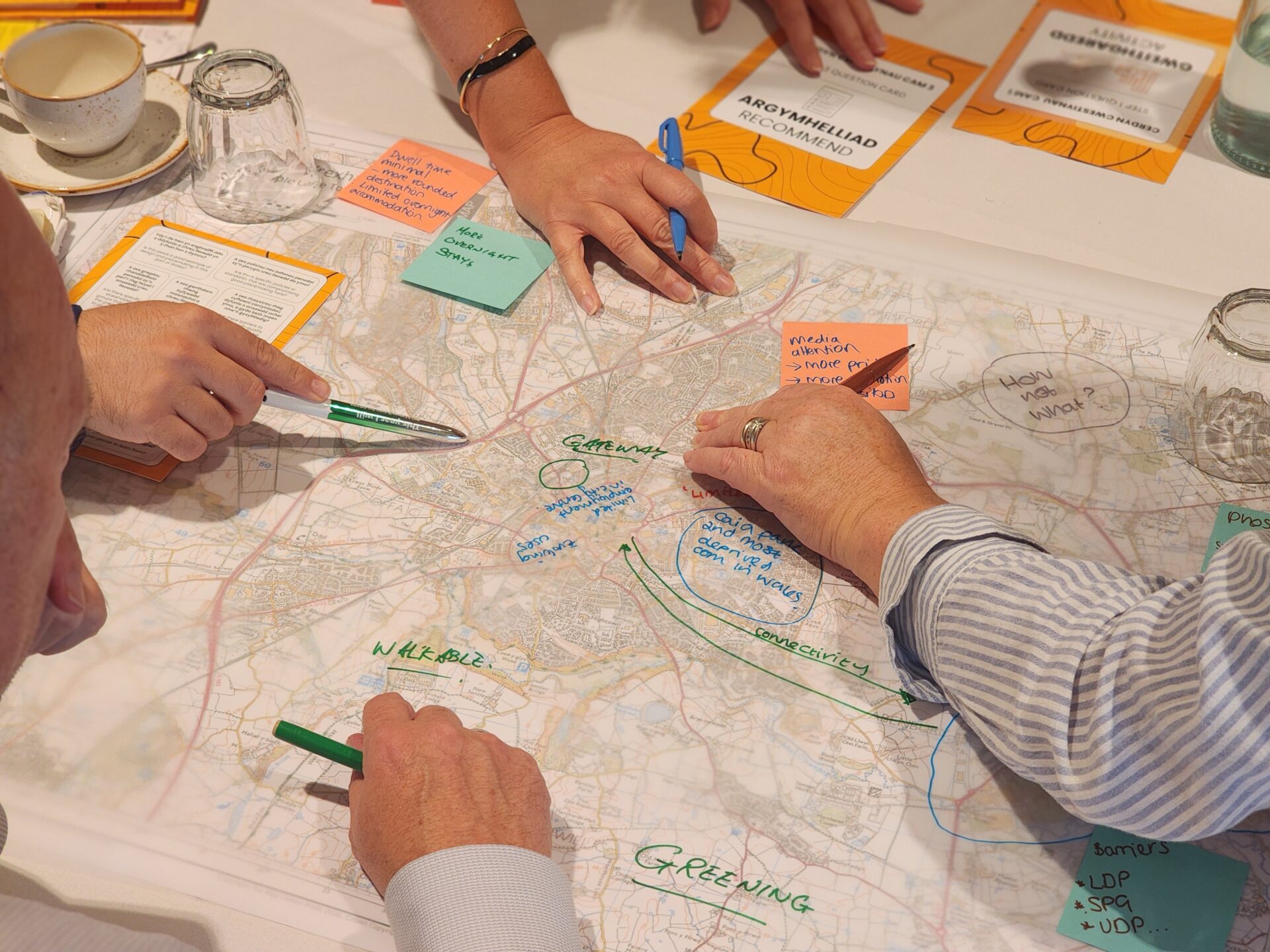
DCFW worked alongside the Council through a series of masterplanning sessions focused on potential strategic development sites. These sessions brought together planning officers, highways and drainage engineers, ecologists and site promoters. DCFW assembled a multidisciplinary panel, drawing on relevant expertise for each site and adapting its membership where different perspectives were needed.
Together, participants explored how each potential site related to its wider settlement, what good development could look like and what expectations should be secured through planning policy.
Discussions considered:
-
Movement and connectivity: Improving movement and active travel connections within and beyond development sites.
-
Land ownership and boundaries: Understanding how ownership patterns and site boundaries could influence the quality of future places.
-
Landscape and character: Exploring the relationship between existing landscape features and the character of future residential development.
-
Affordable housing and sustainability: Considering how ambitions for affordable housing and net-zero homes could be balanced with viability and design quality.
-
Planning policy and evidence: Identifying the evidence and rationale needed to navigate competing policy objectives.
The difference it made
By engaging with DCFW before positions became fixed, the Council had the opportunity to explore different possibilities, challenge assumptions and establish clearer reasoning behind its decisions.
The sessions helped translate placemaking considerations into clearer policy expectations before detailed discussions with developers began.
They also strengthened emerging objectives around movement, active travel and creating developments that function as well-designed places, rather than simply collections of homes.
Importantly, DCFW’s independent perspective gave planning officers greater confidence when approaching discussions with developers, helping them advocate for ambitious placemaking outcomes with wider professional backing.
A perspective from Monmouthshire
“It was really, really useful, and it helped us sort of hone in on some of the policy wording within the plan… I think they focused conversations and made us focus in on what mattered ultimately, rather than the bits which sometimes get sidelined.”
– Chief Officer for Place and Community Wellbeing, Monmouthshire County Council
The value of independent design advice
An important part of the process was the relationship between the Council’s local planning knowledge and DCFW’s independent design and placemaking expertise.
As an arm’s-length body, DCFW was able to maintain an ambitious focus on achieving the best possible development, independently of immediate political, financial and delivery pressures.
The Council brought its understanding of the planning system and local circumstances, while DCFW provided independent challenge and a focus on design quality.
Bringing these perspectives together helped create more informed discussions and strengthened the rationale behind difficult planning decisions.
Learning for other local authorities
The Monmouthshire experience demonstrates the value of involving DCFW early in the development plan process.
It highlights how local authorities can:
-
Engage DCFW before site allocation policies and development expectations become fixed.
-
Bring together different professional disciplines to consider each site as a whole place.
-
Use independent challenge to strengthen the evidence behind complex planning decisions.
-
Create a constructive conversation between ambitious design thinking and practical local knowledge.
The Council described the experience as empowering, highlighting how early engagement can give planning teams greater confidence and scope when shaping site allocation policies.
Looking ahead
The Monmouthshire RLDP had not been adopted at the time of the original case study interview, so its eventual impact is still to be assessed. Final examinations were expected in autumn 2026.
However, the process demonstrates how early collaboration and independent design advice can help local authorities establish stronger placemaking ambitions and clearer planning expectations.
How DCFW can support your work
DCFW can support local authorities at every stage of the development plan process, from early strategic thinking and site selection through to masterplanning and drafting site allocation policies.
We can help teams work through competing objectives, explore opportunities more boldly and establish clear placemaking expectations for future development.
Interested in exploring how DCFW could support your local authority? Email Connect@dcfw.org