News
Impact Story: New Velindre Cancer Centre
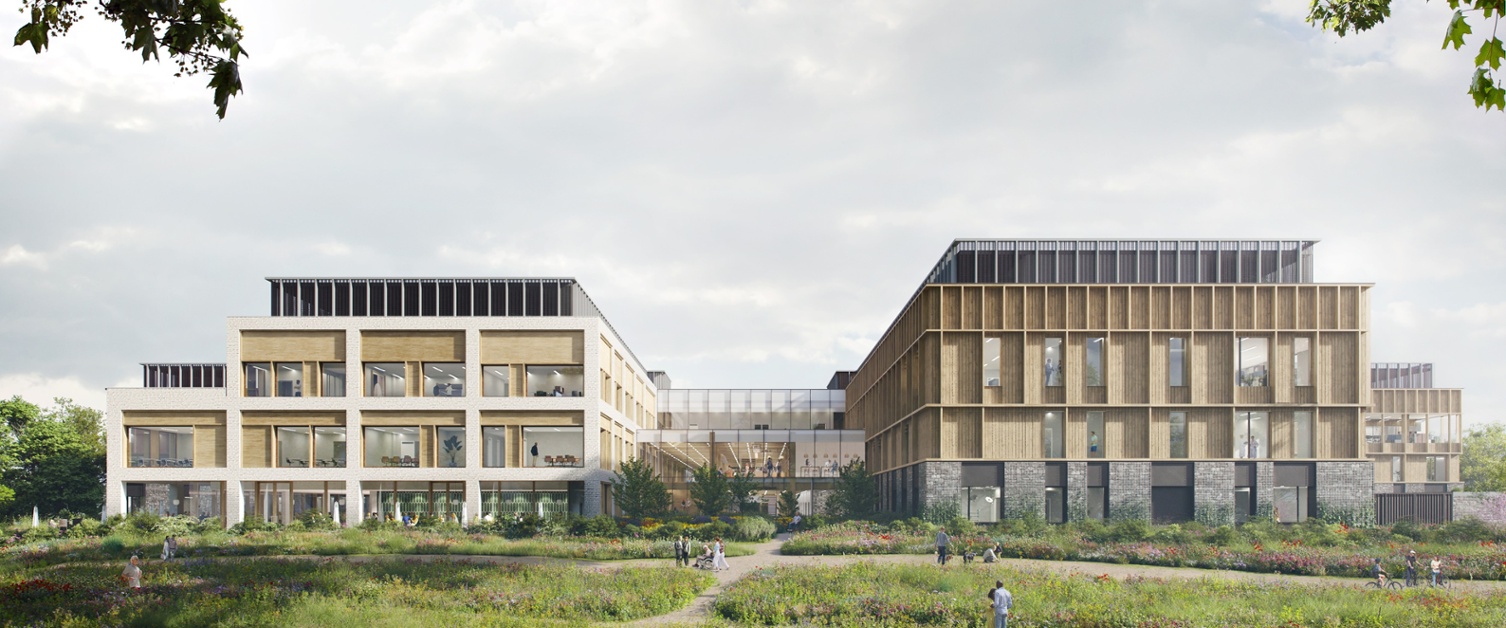
Designing for better cancer care: The new Velindre Cancer Centre
How early and ongoing engagement with the Design Commission for Wales helped the Velindre project team champion design quality, sustainability and patient wellbeing in one of Wales’ largest healthcare investments.
The project
The new Velindre Cancer Centre is due to open in 2027. It represents a major investment in the future of cancer care in Wales, with construction costs of around £320 million.
The existing centre began as a hospital in 1956 and became a dedicated cancer centre in 1995. Having been continually expanded and developed, it now serves more than 1.5 million people and is a focus for internationally important cancer research.
By 2010, it was clear that a new centre would be needed to respond to increasing patient demand and advances in cancer treatment technology.
The ambition was to create more than a replacement hospital building. The new centre was intended to transform the experience of cancer care, recognising that the environment in which people receive treatment is as important as the clinical care, technologies and medicines available to them.
The project set out to combine:
-
Patient wellbeing: Creating a patient-centred environment that supports wellbeing and recovery.
-
Low-carbon design: Embedding sustainability into the design and construction process.
-
Healthy materials: Prioritising sustainable and healthy materials.
-
Energy performance: Exploring innovative approaches to energy efficiency.
A vision for better cancer care
“There’s an understanding and recognition that the way in which the place in which you treat cancer patients is as important as the technologies and the medicines you use.”
– Phil Roberts, Design Champion for the Velindre project
Our approach
DCFW became involved at the earliest stages of the project, before design solutions had been fully developed. This provided an opportunity to influence the project’s direction and offer independent design advice throughout its development.
Our involvement included:
-
Supporting the early development of the project brief.
-
Reviewing and refining the brief as the project evolved.
-
Contributing to the procurement process for the design team.
-
Reviewing emerging design proposals.
-
Reviewing preferred designs ahead of planning.
-
Supporting discussions during subsequent design refinements.
We brought together the professional expertise most relevant to the project at each stage. Rather than relying on a fixed panel, we drew on different perspectives and specialist knowledge as new questions and challenges emerged.
A tailored approach to design review
“There’s an assessment made of the strengths and weaknesses of that project, and then they select the team best placed to address those weaknesses.”
– Phil Roberts, Design Champion
Throughout the process, we acted as a critical friend to the design team. We are not a regulator. Our role is to create space for constructive challenge, allowing teams to test ideas, consider alternatives and make better-informed decisions.
As the project developed, this relationship provided an important opportunity for the team to reflect on its proposals and seek independent professional advice.
An ongoing point of reference
“It’s the referencing point, it’s the sort of check-in, it’s the natural opportunity to sound things out.”
– David Powell, Project Director
The difference it made
One of DCFW’s most important contributions was providing independent support for the project’s commitment to design quality and sustainability.
Large publicly funded projects inevitably face pressures around cost, risk and delivery. Our involvement helped the team maintain its wider ambitions, ensuring that design quality was considered in terms of its contribution to people’s wellbeing and the long-term value of the project.
This was not simply about the specification of fixtures and fittings. It was about protecting the design decisions that could make a meaningful difference to people attending the centre at an incredibly difficult point in their lives.
Our discussions also encouraged the team to consider the whole experience of spending time at the cancer centre.
For example, during one review, conversations extended to the quality of hospital food and the potential role of local food supply chains. This demonstrated the wider value of design review: creating space to consider the bigger picture and allowing important, sometimes unexpected, issues to emerge.
The Velindre team also valued the professional credibility that came from having independent design expertise supporting its ambitions.
The value of independent support
“Because we went to the Design Commission, and we had the Design Commission supportive of what we were trying to achieve… that was a big area where it gives the trust credibility.”
– Phil Roberts, Design Champion
The team described the experience as a source of professional validation, providing access to independent expertise and informed perspectives throughout the design process.
A professional perspective
“You’re basically getting a proper professional validation… with people who know what they’re talking about.”
– David Powell, Project Director for the new Velindre Cancer Centre
Why involve DCFW?
The Velindre Cancer Centre project demonstrates the value of involving independent design expertise from the outset and maintaining that relationship throughout a project’s lifecycle.
Early engagement allowed DCFW to contribute to strategic decisions that shaped the initial brief and design direction, while continued involvement provided a trusted opportunity for constructive challenge as the project progressed.
The experience also highlights how independent design support can help project teams:
-
Engage early to shape the brief and establish ambitious design objectives.
-
Access relevant professional expertise at different stages of a project.
-
Welcome constructive challenge through an independent critical friend.
-
Maintain a commitment to long-term public value when navigating pressures around cost, risk and delivery.
The Velindre team strongly recommended this approach to other large-scale, publicly funded projects, highlighting the importance of viewing design review as a supportive and collaborative process rather than a regulatory exercise.
Lessons for other public-sector projects
The experience at Velindre demonstrates that good design is about much more than the appearance of a building.
It involves considering how places function, how people experience them and how design decisions can contribute to wider social, environmental and public benefits.
For major public projects, engaging DCFW early and throughout the design process can help teams maintain their ambitions, explore alternatives and make informed decisions that support long-term public value.
How DCFW can support your work
DCFW works with public bodies across Wales to support better design and placemaking.
Our free service can help organisations shape their approach from the earliest stages of a project, navigate the policy landscape and put good design at the heart of their work.
We can also support local and national policy development and provide bespoke training to help teams work more effectively with developers and built environment professionals.
Our support is shaped around the needs of each organisation and project.
Planning a major public-sector project? Get in touch to explore how DCFW can support your work.