News
Llunio Lle – Shaping Places: The Role of Art and Culture in Placemaking in Rural Communities
Engaging communities in place planning is essential to shaping vibrant, distinctive places, enabling people to document local needs, shape a shared vision, and set priorities. But in rural areas, where challenges are different, traditional placemaking approaches, usually focussed on infrastructure and gaps in service provision, can only partially reveal the lived experience of these localities. This is where art and creativity can become a catalyst for community agency, by revealing a deeper narrative which in turn becomes the anchor point of more holistic place planning.
Llunio Lle – Shaping Places is an example of what’s possible when culture is placed at the heart of rural placemaking. Its inclusive approach prioritised empowered participation and value-led community conversation over top-down planning.
It is a UKSPF funded project delivered for Cyngor Sir Ceredigion County Council by Chris Jones Regeneration in partnership with Studio Response and Gwe Cambrian Web. The project’s aims were to develop and produce a digital Placemaking Portal for all of Ceredigion’s 13 Rural Service Centres to be published on a bilingual online platform designed to engage residents in the development and improvement of public spaces across the county. The website provides a people centred resource, providing information on data and numbers, community stories and the future visions and plans – Ceredigion Places | Placemaking in Ceredigion.
Local, Welsh speaking artists – writer Hattie Morrison, visual artist Meinir Mathias and filmmaker Heledd Wyn – were embedded at the centre of the project. Their role wasn’t to embellish the process or to make it more enjoyable; it was to unlock new ways of listening, learning and understanding. Together, they helped communities explore sense of place and local distinctiveness, creating a space where residents could negotiate differing views, recognise shared concerns and celebrate what makes each place unique.
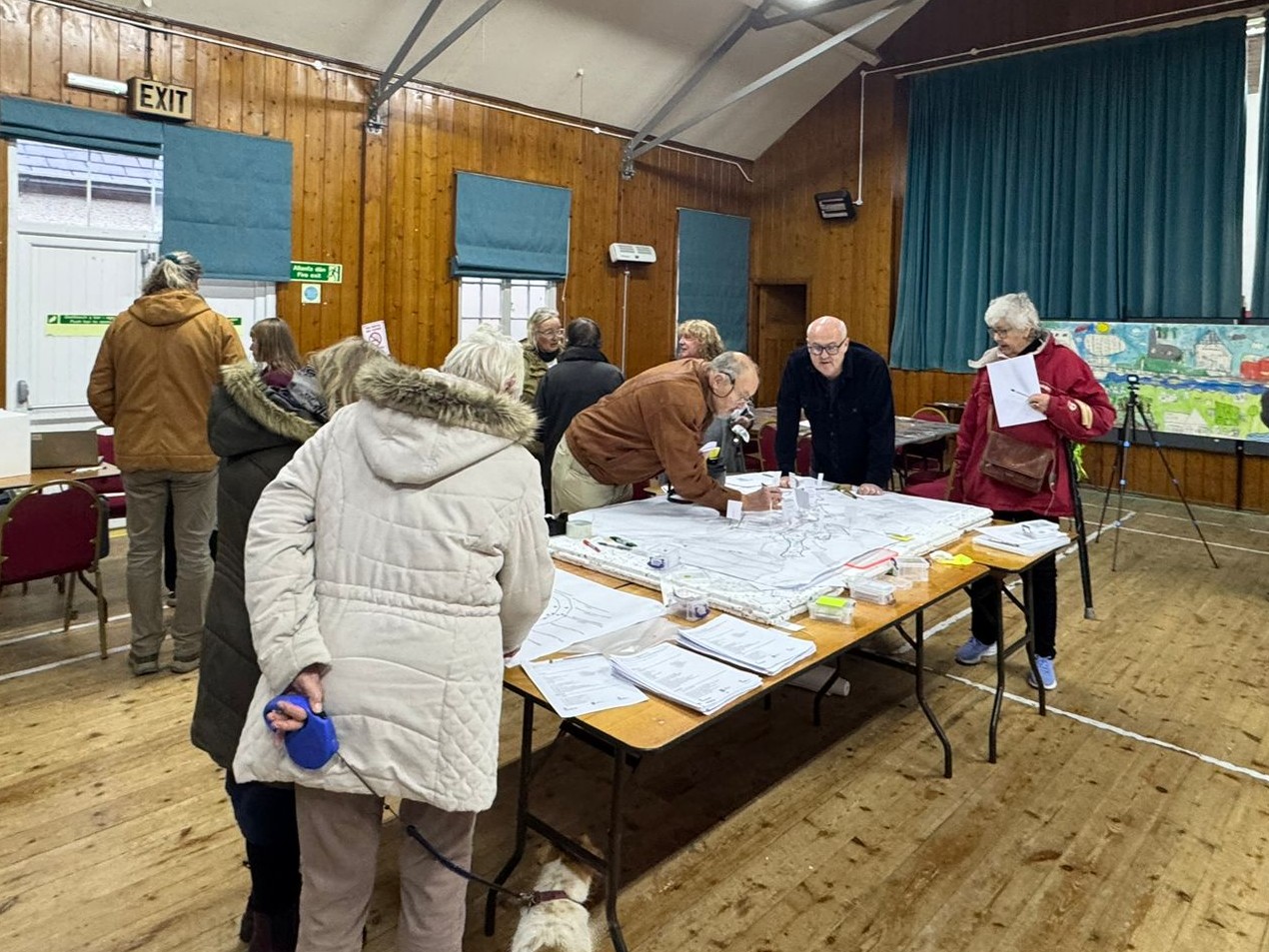
Storytelling became both process and outcome. Hattie invited everyone to share stories, reflections and aspirations in a simple yet meaningful way: by writing them on cards, which were placed into a large, clear box, providing a shared experience and creating a striking display of amassed, collected stories—a living archive of voices and moments.
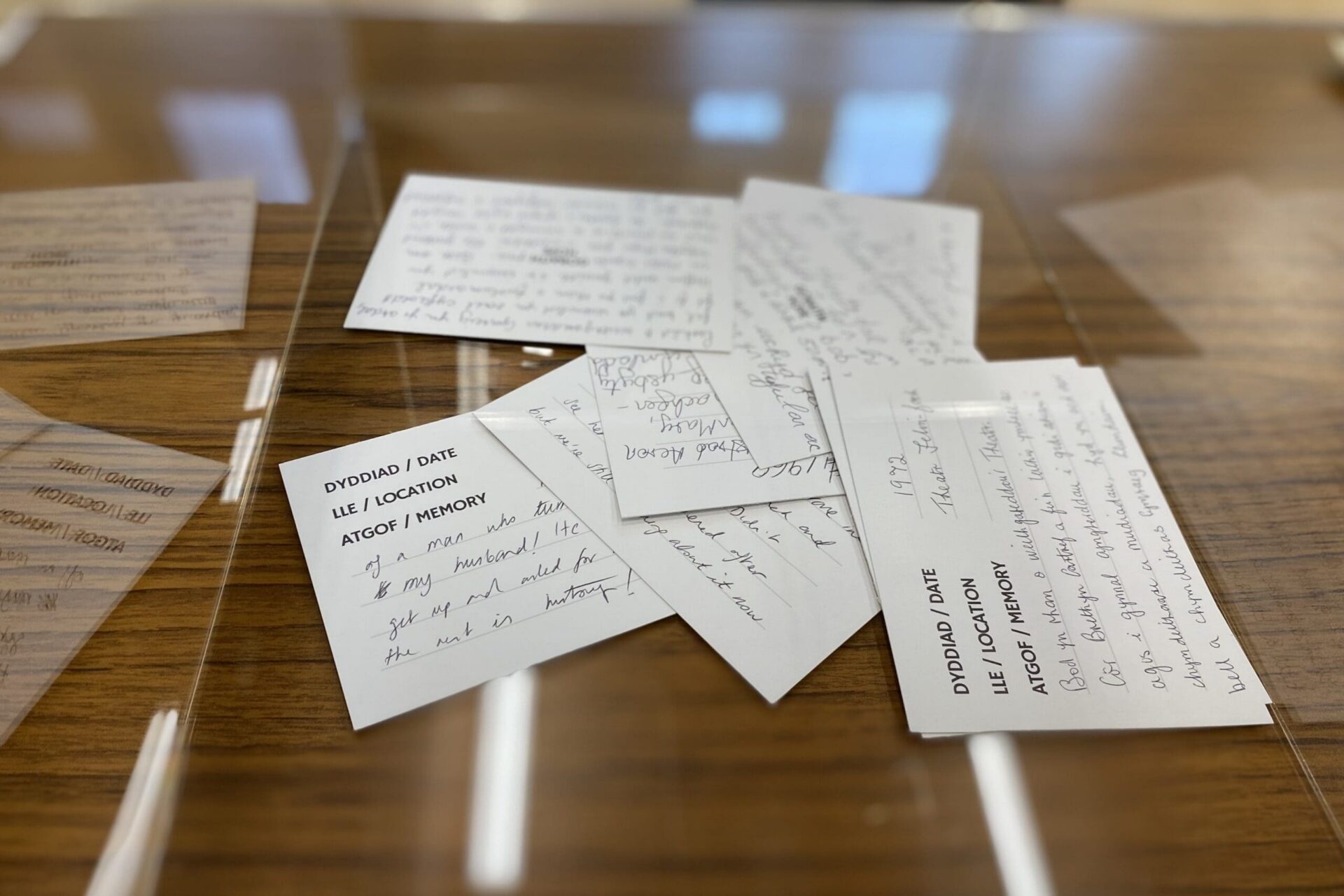
From these cards and conversations, Hattie wrote a monologue for each village, blending cherished memories, stories and local folklore with lived experiences, hopes and aspirations.
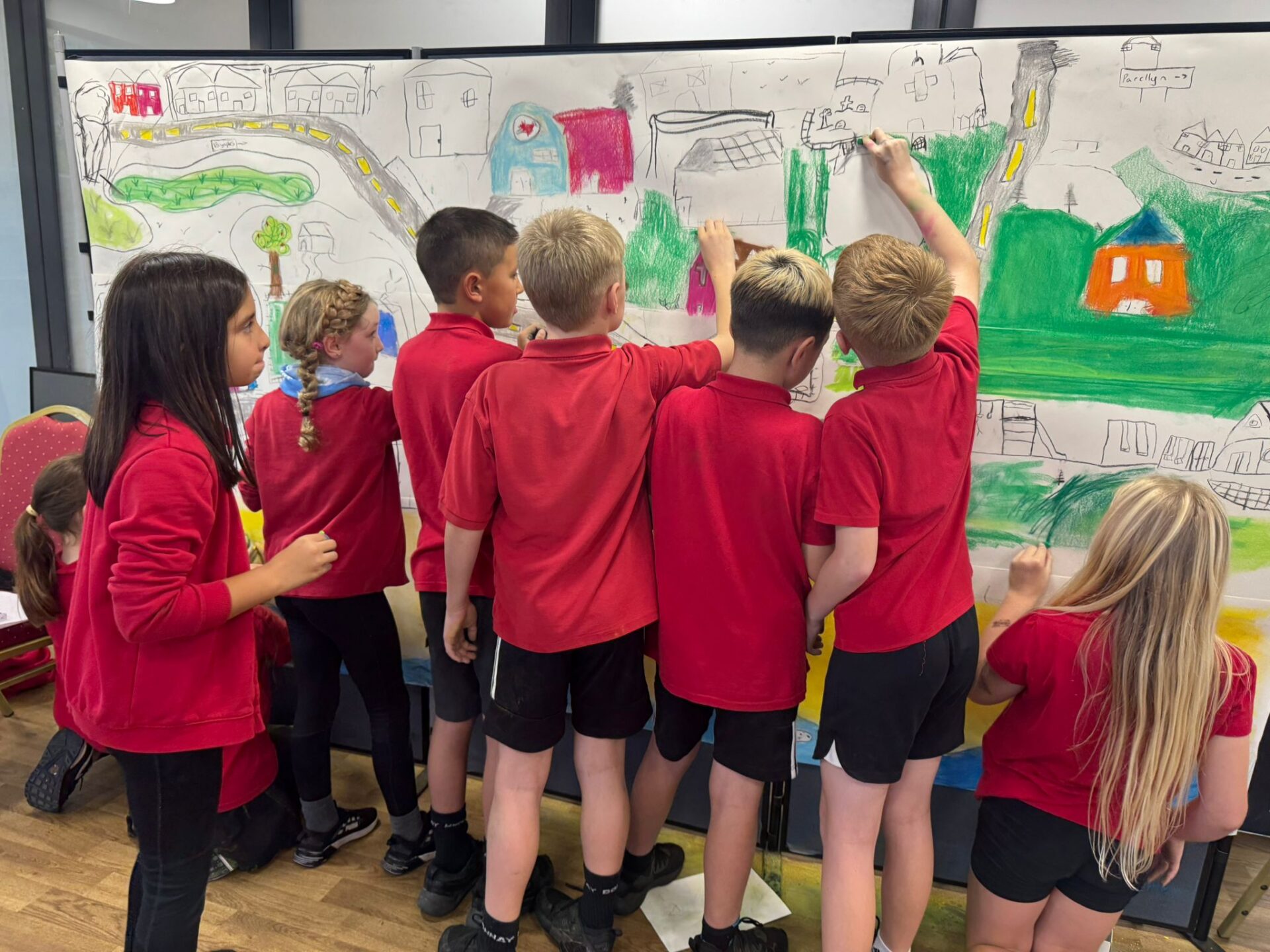
Meinir brought creativity and collaboration to the heart of the community sessions, fostering an open and welcoming atmosphere through participation in low-key creative activities.
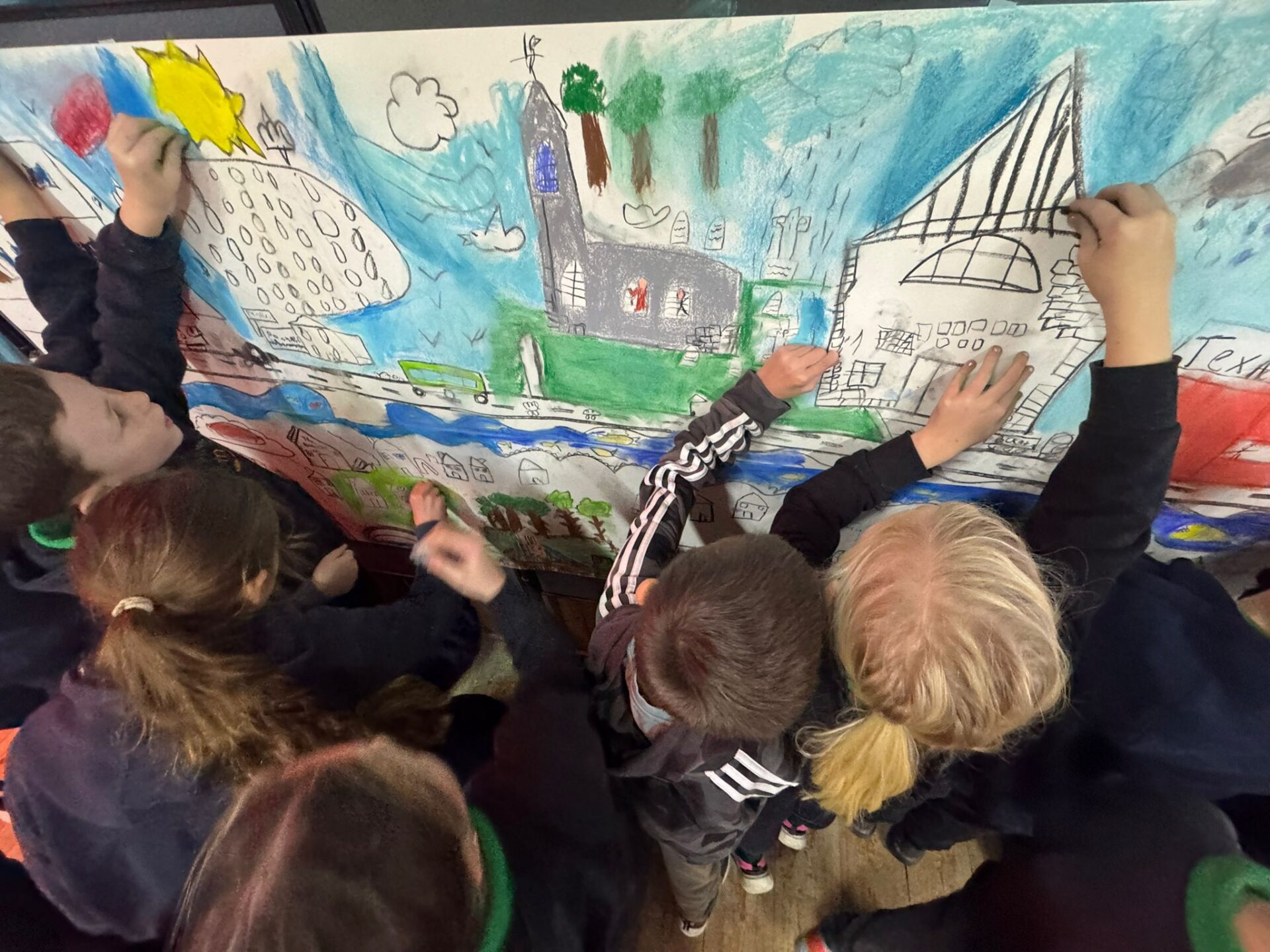
Particapants, including local primary schools, worked together to create a large-scale, vibrant map of each location, built through shared colour, shapes, and mark-making. These collaborative artworks captured the essence of each place – making its inherent qualities more visible and valued, highlighting key landmarks and meeting places alongside deeper meanings woven into each community.
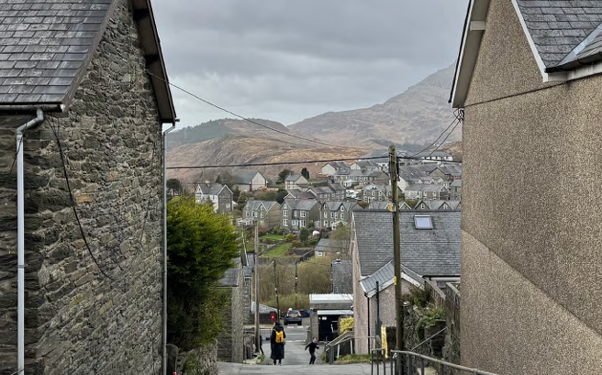
The process was documented through time-lapse footage and still photography, with video reflections filmed by Heledd—capturing not just the art, but the voices and stories behind it. Heledd, supported by undergraduate media students, filmed the physical sense of place, which illustrated the contrasting landscapes of each community that underpins their identity.
These “thinking through doing” workshops encouraged collective making and a gentleness of engagement, and saw communities explore identity, memory, aspiration and sense of place in ways that were different, refreshing and accessible to all ages. Importantly, they created space for quieter voices, resulting in more representative community based plans.
Llunio Lle offers a compelling model for rural placemaking. It recognises that when communities take part in shaping their places, their motivation is often driven by a deep, emotional connection to place, a connection that is woven through collective life stores. By revealing this deeper sense of place, we can better understand the resilience of rural communities, and uncover inherent possibilities and opportunities rather than imposing ‘solutions’.
Crucially, whilst creativity was integral to the project’s methodology, art should not be limited to an engagement tool. What is emerging from the developing place plans is that communities themselves are positioning culture as vital rural infrastructure, with it embedded in aspirations for village halls, basic services, environmental improvements, heritage interpretation and wellbeing initiatives.