News
Unlocking Small Sites Through Community-Led Housing
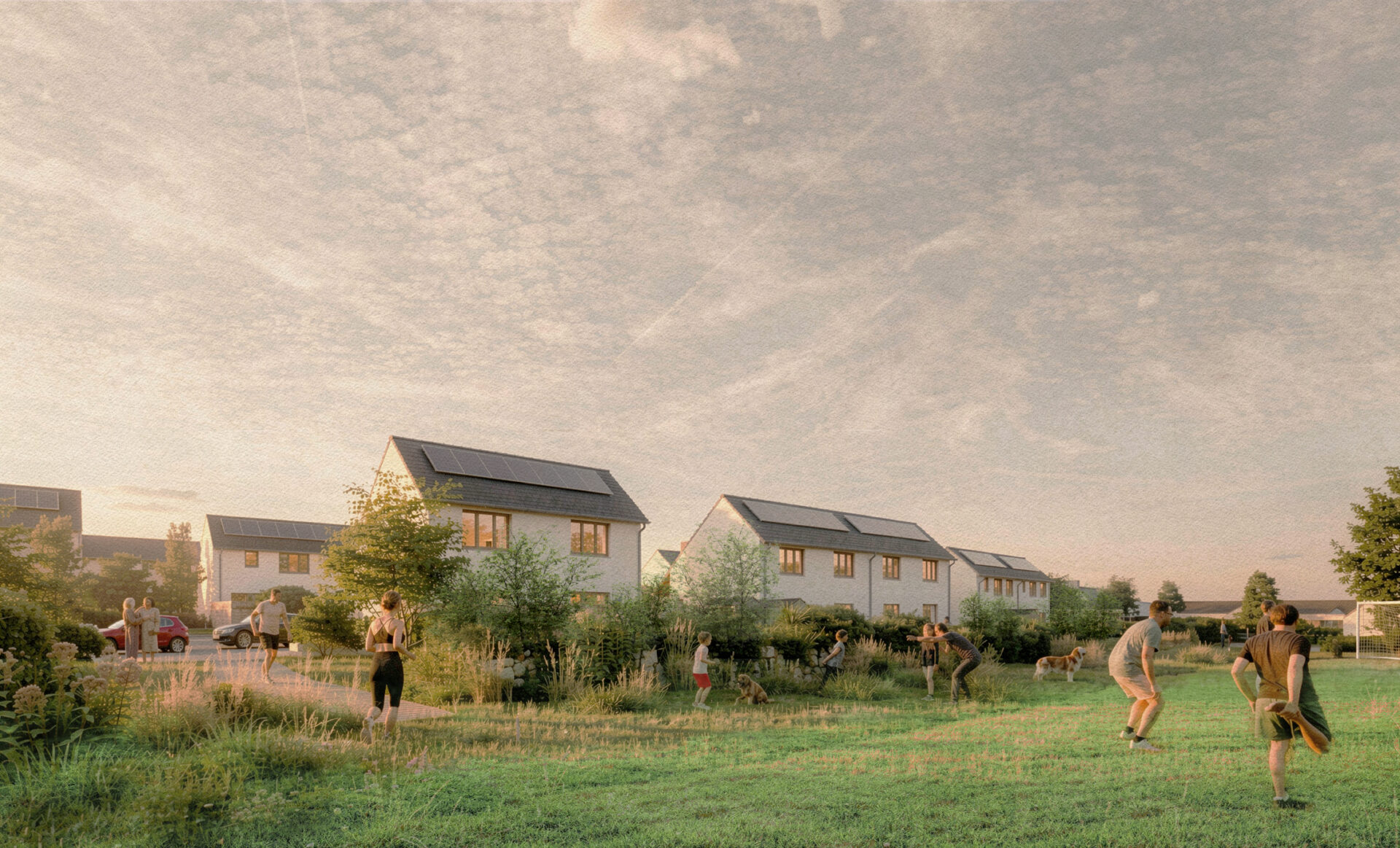
Small housing developments can make a meaningful contribution to meeting local needs, particularly in rural communities where opportunities for new homes can be limited. The Solva project in Pembrokeshire demonstrates how community leadership, negotiation and flexibility, alongside a commitment to good design, can help unlock opportunities for new homes.
Solva is a pioneering affordable housing development in the Pembrokeshire Coast National Park, the first partnership project between a community land trust (CLT) – the Solva CLT – and housing association partner – ATEB- in Wales. The scheme will deliver 28 new affordable homes, with a mix of apartments, houses and bungalows.
Residents of the picturesque fishing village and tourist hot spot of Solva were in desperate need of affordable housing for locals priced out of the market by second home ownership and the pressures of short-term holiday rentals. Forming the Solva Community Land Trust, residents identified a parcel of land located between existing residential areas, previously used as a recreation ground and occasional overflow car parking, to be put forward as an affordable housing exception site.
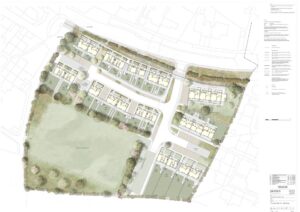
The CLT developed an inspirational briefing document capturing their own aspirations for the project from the re-provision of an under 13s football pitch to attitudes towards the landscape, streetscapes, character and quality of the housing and how residents would live and interact. They then engaged with affordable housing provider ATEB, and community-led and affordable housing specialists, Pentan Architects.
A series of public engagement events from the very early stages of the project and regular feedback sessions from the CLT canvassed the local community’s opinions on the development as it progressed, with the CLT central to the developing designs and in attendance at every design team meeting.
A number of key aspects of the project have assisted in unlocking this site for the housing the village needed. Key to the successful partnership has been flexibility from the housing association partner to accommodate the CLT’s understandably high aspirations towards character, materiality and detailing as well as perseverance in securing the transfer of land from the local authority to ATEB who will have ongoing responsibility for the management and maintenance of the development.
With the main road into the village to the north of the site, a retained under 13s football pitch to the south and movement through the site from the surrounding developments and wider landscape, a careful approach to the balance of public ‘fronts’ and more private ‘rears’ was required to ensure all were suitably well addressed.
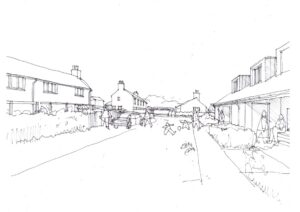
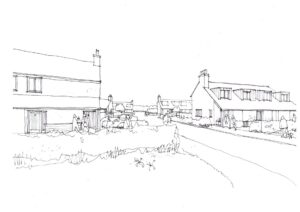
This challenged conventional approaches to fronts and backs to make the most of the site’s potential. The resulting design creates opportunities for overlooking of the public spaces, streets that invite play and socialising and softer boundaries that help connect the development with the surrounding public spaces and landscape, and encouraging neighbourliness.
A pragmatic approach from both the designing out crime officer and Welsh Government technical scrutiny team ensured these opportunities were not lost behind close board fencing, acknowledging the sites’ low crime rates and the community’s desire for a scheme that helped strengthen the sense of community.
Another key element in unlocking the site’s potential has been the creation of a carefully crafted set of house types to suit the site’s prominent position in the landscape, opening up to the southerly aspect towards the coast and being more sheltered to the north along the busy main road into the village with low eaves and deep, sheltered porches. The resulting ‘cat-slide’ roof forms a reference to the vernacular seen in the historic heart of the village.

The potential of this relatively small parcel of land has been unlocked by the CLT’s determination to deliver high-quality housing for their community. Despite a 6 year process involving challenges around planning, water treatment capacity and environmental considerations, the commitment of the CLT members will soon reap their rewards with a scheme they can be proud of.
Solva demonstrates how community leadership, collaboration and a commitment to good design can help realise the potential of smaller sites, delivering much-needed homes that respond to local needs and contribute positively to the character and life of a place.